The Hidden Cost of Empty Restaurant Tables
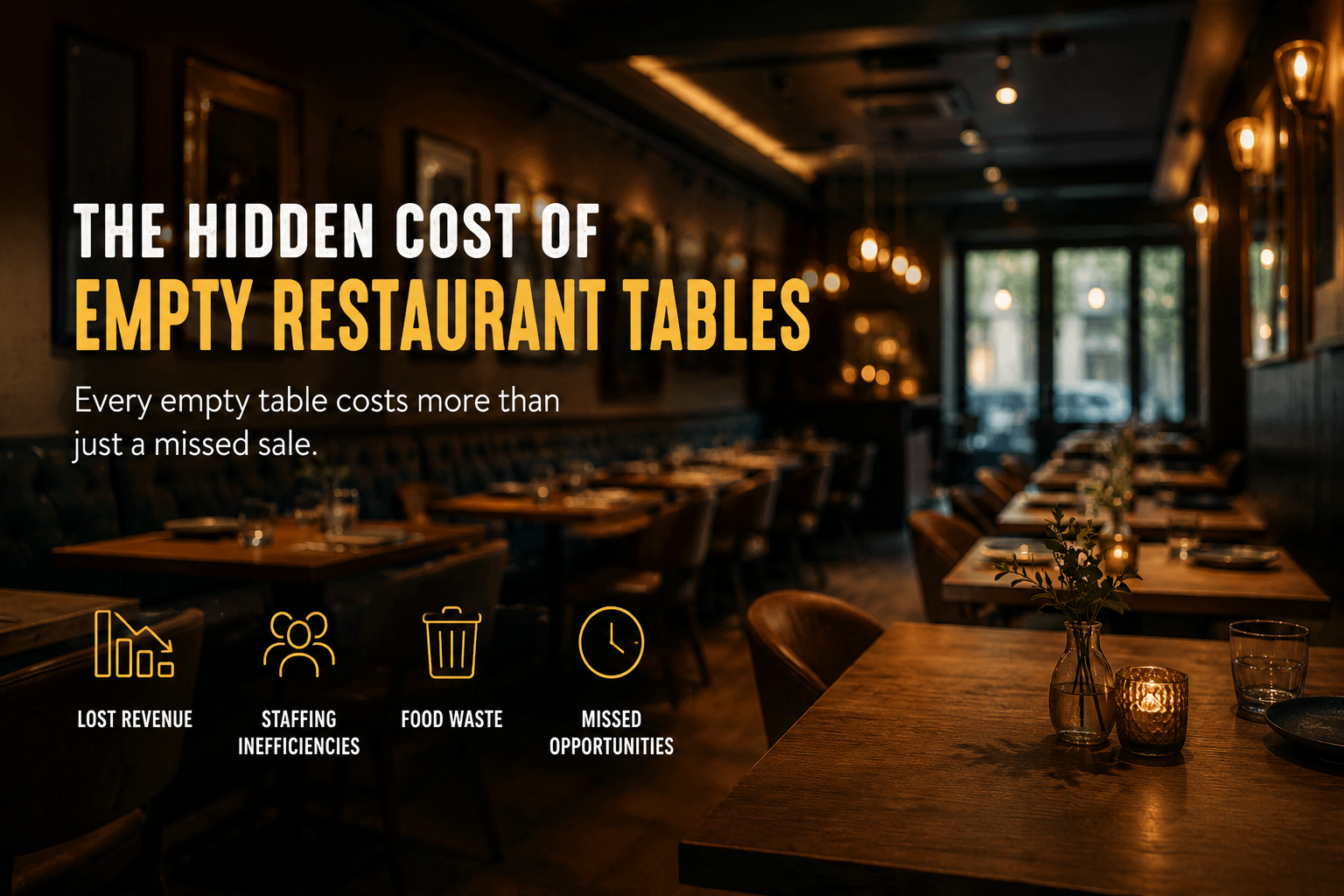
Most restaurant owners don't need reminding that empty tables are bad for business. When a dining room sits half full during service, the impact is immediately visible. Fewer diners mean lower sales, quieter staff and reduced revenue for the evening.
But the true cost of empty tables often extends far beyond the revenue lost from a single meal. Behind every unused seat lies a chain of financial, operational and strategic consequences that can affect profitability, efficiency and long-term growth.
For many restaurants, the biggest challenge isn't attracting customers during peak periods. It's maximising occupancy during the quieter hours when fixed costs continue to accumulate and opportunities quietly disappear.
Understanding the hidden cost of empty tables is the first step towards solving the problem.
Empty Tables Mean Lost Revenue That Can Never Be Recovered
Unlike retailers, restaurants operate with highly perishable inventory. A clothing store can sell an unsold jacket next week. An electronics retailer can hold stock for months if necessary. A restaurant doesn't have that luxury.
If a table remains empty at 6 pm tonight, that opportunity disappears forever. Once a service period has ended, the revenue associated with those unused seats is gone. For many operators, the impact can be surprisingly significant.
Consider a restaurant with 80 covers.
If just ten seats remain empty during a key service period, and the average spend per guest is £35, that's £350 in lost revenue for that sitting alone. Multiply that across multiple services each week and the numbers become substantial. The challenge becomes even greater when food, drinks and additional spending are taken into account.
An occupied table doesn't just generate revenue from a main course. It may also generate:
- Starter sales
- Desserts
- Alcoholic beverages
- Soft drinks
- Coffee
- Future repeat visits
Every empty table represents an entire customer journey that never happened.
Fixed Costs Don't Disappear When Tables Are Empty
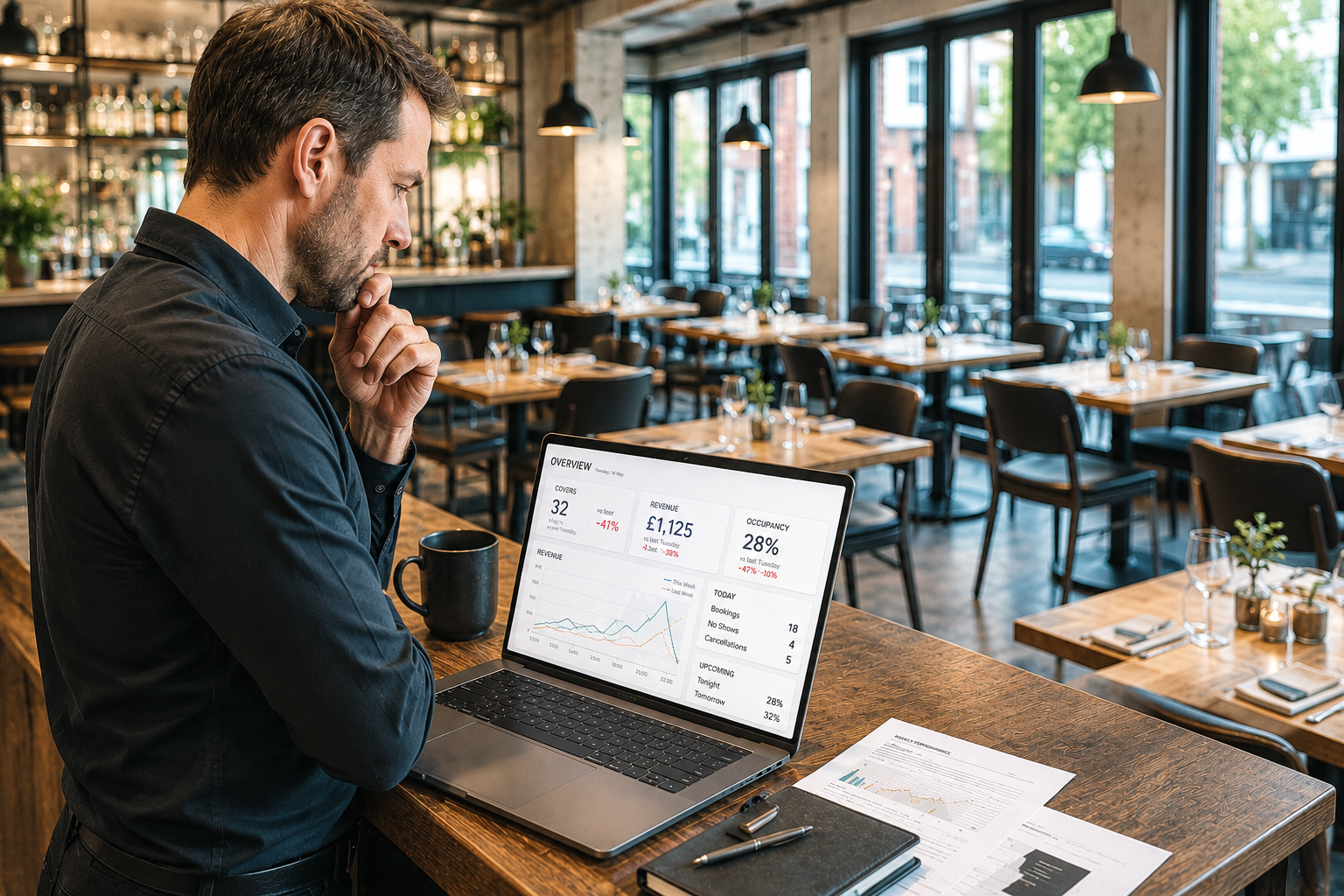
One of the biggest misconceptions in hospitality is that lower occupancy simply means lower revenue. In reality, many of a restaurant's costs remain exactly the same regardless of how many guests arrive.
These costs include:
- Rent
- Business rates
- Utilities
- Insurance
- Software subscriptions
- Equipment maintenance
- Licensing fees
Staffing costs often remain largely fixed too.
A restaurant expecting a busy evening may schedule chefs, waiting staff and managers based on projected demand. If bookings fail to materialise, those wages still need to be paid. This means occupancy directly impacts profitability.
The difference between a restaurant operating at 60% capacity and one operating at 85% capacity can often be the difference between a difficult month and a highly profitable one.
Staffing Inefficiencies Quietly Erode Margins
Labour is one of the largest costs facing hospitality businesses. When demand is accurately forecast, staffing levels can be aligned with expected service requirements. When occupancy falls short of expectations, inefficiencies emerge quickly.
-
Too many staff may be scheduled for the number of covers served.
-
Managers may be forced to absorb higher labour costs than anticipated.
-
Productivity levels can fall as team members spend more time waiting than serving.
This creates a difficult balancing act.
Restaurants cannot simply cut staff every time demand fluctuates. Service quality still needs to be maintained, and customer experience must remain consistent. As a result, many operators absorb the additional labour cost associated with quieter periods.
Over time, these hidden inefficiencies can have a meaningful impact on profitability.
Food Waste Often Increases During Quiet Periods
Food purchasing and preparation are heavily influenced by expected demand. Restaurants forecast covers, estimate ingredient requirements and prepare stock accordingly. When demand falls short, waste often increases.
-
Fresh ingredients may not be used within their intended timeframe.
-
Prepared items may need to be discarded.
-
Inventory forecasting becomes less accurate.
The hospitality industry already faces significant pressure to reduce waste for both financial and environmental reasons. Empty tables make that challenge even harder.
The issue becomes particularly pronounced in restaurants that rely on fresh produce, seafood, specialist ingredients or daily-prepared menu items. A quiet service can quickly translate into unnecessary waste costs.
Marketing Spend Becomes Less Efficient
Restaurants invest heavily in attracting customers.
This may include:
- Social media advertising
- Search marketing
- Email campaigns
- Influencer partnerships
- Promotions
- Loyalty programmes
The goal is simple: increase demand.
However, when empty tables persist despite ongoing marketing investment, operators are often left questioning the return on that spend. The issue isn't necessarily that marketing isn't working.
It's that traditional marketing is often designed to build awareness rather than fill availability in real time. A restaurant may have hundreds or even thousands of followers on social media, yet still struggle to fill quieter service periods.
The challenge becomes one of timing. Awareness alone doesn't guarantee occupancy.
No-Shows Make The Problem Worse
No-shows and last-minute cancellations continue to be one of the hospitality industry's biggest frustrations. A restaurant can appear fully booked earlier in the day only to experience multiple cancellations before service begins.
The result is unused capacity that may be impossible to replace at short notice. The financial impact extends beyond the missing covers themselves.
-
Staffing decisions have already been made.
-
Food may already have been ordered or prepared.
-
Revenue forecasts may already have been adjusted based on expected occupancy.
For restaurants operating with tight margins, even a small number of no-shows can have a disproportionate impact.
Empty Tables Can Damage Team Morale
The impact of low occupancy isn't purely financial.
-
Hospitality teams thrive in busy environments.
-
Chefs enjoy producing dishes during active service.
-
Front-of-house staff often perform at their best when interacting with guests and delivering memorable experiences.
-
Extended quiet periods can affect morale.
-
Lower tip income may impact staff earnings.
-
Teams may feel frustrated when effort doesn't translate into customer activity.
-
Owners and managers can become increasingly focused on short-term revenue pressures.
While this may not appear on a profit-and-loss statement, its effect on culture and motivation should not be underestimated.
Missed Opportunities Extend Beyond The Immediate Sale
One of the most overlooked costs of empty tables is the opportunity cost.
A diner who never visits your restaurant cannot:
- Leave a review
- Recommend your venue
- Join your loyalty programme
- Follow your social channels
- Become a repeat customer
The value of a guest often extends far beyond a single transaction. A customer who spends £40 tonight may spend hundreds or even thousands of pounds with a restaurant over the coming years.
-
They may introduce friends, family, and colleagues.
-
They may become regular visitors.
-
Every empty table represents a relationship that was never created.
Underutilised Capacity Restricts Growth
Restaurants invest heavily in creating capacity. Dining rooms are designed, furnished and staffed to accommodate guests. When that capacity remains underutilised, the return on those investments falls.
A venue operating below its potential is effectively carrying unused assets every day. The irony is that many restaurants don't necessarily need more space. They simply need to use their existing space more efficiently.
Improving occupancy often delivers greater returns than expensive expansion projects or major refurbishments. Making better use of what already exists can be one of the fastest routes to improved profitability.
Why Demand Matching Matters More Than Ever
The hospitality industry has traditionally focused on attracting customers through broad marketing campaigns. Increasingly, the challenge is becoming more specific.
How do restaurants connect available tables with diners who are actively looking for somewhere to eat? The answer lies in better demand matching.
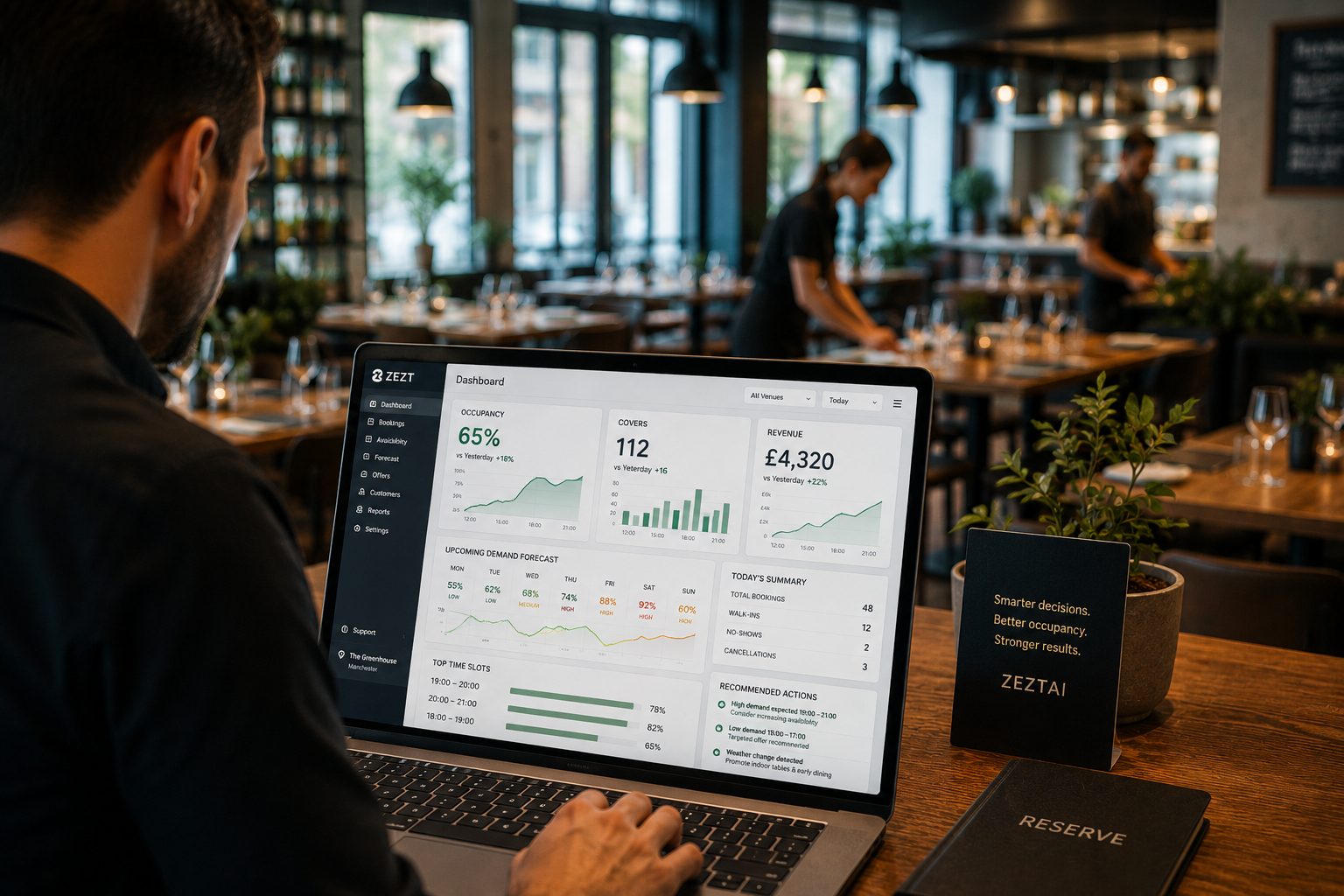
Modern consumers expect real-time information, immediate availability and relevant recommendations. At the same time, restaurants need better visibility into changing demand patterns.
Weather, local events, traffic, seasonality, consumer preferences and availability all influence dining behaviour. Understanding these signals allows operators to make smarter decisions about promotions, pricing, and occupancy management.
The objective isn't simply to increase bookings. It's to maximise utilisation of existing capacity while maintaining profitability.
Conclusion
The true cost of empty restaurant tables extends far beyond the revenue lost from a single service.
Lost sales, labour inefficiencies, food waste, marketing challenges, no-shows and missed customer relationships all contribute to the problem.
For many restaurants, the issue isn't a lack of demand. It's the difficulty of connecting available tables with the right diners at the right time.
As hospitality becomes increasingly data-driven, operators who can better understand demand patterns and respond in real time will be better positioned to maximise occupancy, improve profitability and create more resilient businesses.
Because every empty table carries a cost. The challenge is ensuring fewer of them remain empty.
Paul Holmes
Founder ZEZTAI
Comments